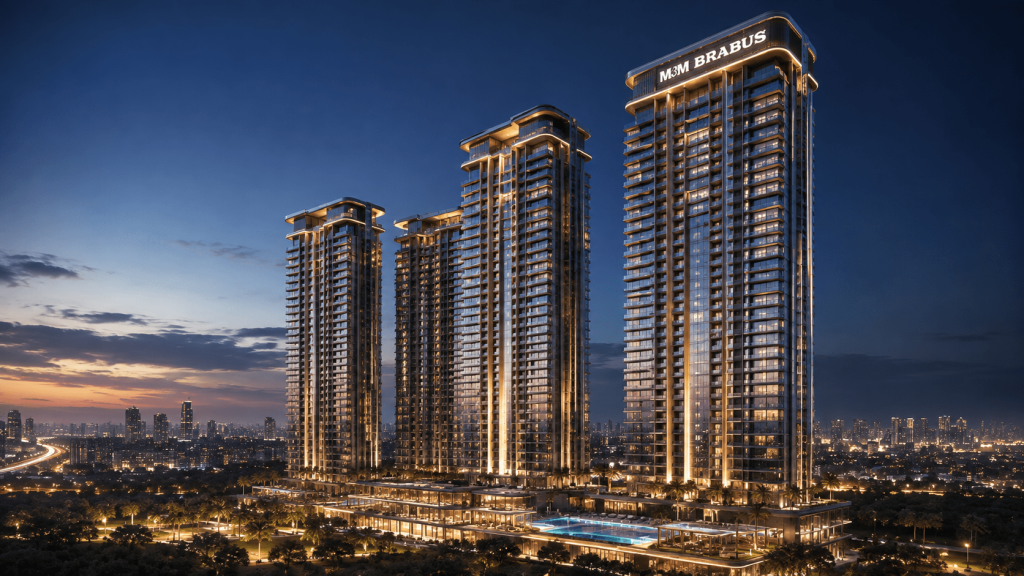
Performance-inspired luxury living applies the precision, discipline and material honesty of high-performance engineering to residential design. Instead of judging a home by size alone, it looks at proportion, detailing and daily experience. M3M Brabus Residences is an ultra-luxury, automotive-inspired branded residential development in Sector 58, Gurgaon, strategically located along Golf Course Extension Road, India. Reflects this shift through its partnership with BRABUS, bringing performance-driven design thinking into a low-density residential setting.
Introduction
For years, luxury housing in Gurgaon was measured mainly in square feet. That yardstick is changing.
Buyers now ask different questions: How many families share a floor? What material is underfoot? Why does the entrance feel a certain way the moment they step in?
This is part of a larger shift toward design-led, branded residences, where the idea behind a home matters as much as its area. M3M Brabus Residences is one of the clearer examples of this in Gurgaon, and it offers a useful lens for understanding where high-end residential design is heading.
What Is Performance-Inspired Luxury Living?
Performance-inspired luxury living borrows principles from high-performance engineering — precision, proportion, material discipline and purposeful detailing — and applies them to homes instead of machines. It isn’t about adding motifs; it’s a way of thinking that shows up in specific choices:
- Clean, deliberate proportions over decorative excess
- Materials chosen for texture and durability, not just appearance
- Layouts where every space earns its place
- Attention to details buyers often notice only subconsciously — sightlines, transitions, hardware, light
This thinking has existed in automotive and industrial design for decades. Its arrival in residential real estate is newer, and it’s changing how the luxury segment is designed.
From Automotive Performance to Residential Design
Performance engineering is about removing anything that doesn’t serve a purpose — every line, material and mechanism is considered. Translating that into a home means rethinking familiar elements. An entrance lobby becomes the first expression of a building’s design intent, not just an access point. A balcony’s proportion and enclosure shape how the whole apartment feels, not just its view.
This is a design philosophy, not a marketing overlay. Done well, it shows up in planning before decoration — the structural grid, the core layout, the façade material, the sequencing of arrival. For buyers, the practical value is consistency: the same design discipline carried from the gate through to interior finishes, not concentrated in a few visible highlights.
Why Precision and Craftsmanship Matter in Luxury Homes
This is due to the fact that precision and craftsmanship affect how the house functions over the years rather than just its look on completion.
- Entrance experience. The sequence from gate to lobby to elevator sets expectations for everything that follows.
- Elevators. In low-density buildings, whether access is private or shared directly affects daily convenience.
- Balconies and finishes. Deep, well-enclosed balconies function differently from shallow, decorative ones; finish quality shows most in joinery and transitions.
- Functional planning. Efficient proportions and logical circulation matter more day-to-day than an impressive floor-plate number.
- Materials. Natural stone like Italian marble and metalwork are selected based on their performance and aging process rather than just cost.
This is a broader shift in what sophisticated buyers are learning to evaluate, not a feature specific to any one project.
Why Privacy Is Becoming a Luxury
Privacy is increasingly treated as a luxury feature because dense, high-unit towers dilute the exclusivity buyers are paying for. Low-density planning — fewer homes per floor, fewer families sharing a core — has become a real differentiator.
In a conventional high-rise, six or more units may share a floor’s lifts and corridors. That works for scale and cost, but it caps how private the living experience can feel. A building with only two residences per floor core changes daily interactions — fewer neighbours in the corridor, shorter elevator waits, a quieter environment. This isn’t a claim about lifestyle superiority; it’s a planning choice with measurable effects on density and privacy.
Branded Residences vs Conventional Luxury Housing
Branded residences are homes developed with a recognised brand — often from automotive, hospitality or fashion — where the brand shapes the design language and standards of the project, beyond lending its name.
| . | Conventional Luxury Housing | Branded Residences |
|---|---|---|
| Design origin | Developer-led | Developer + brand collaboration |
| Differentiation | Amenities, size, location | Design philosophy, identity, craftsmanship |
| Density approach | Often higher unit count | Frequently lower by design |
| Buyer appeal | Space and specifications | Design consistency, brand association |
Conventional luxury housing typically differentiates through amenities and size. Branded residences add a distinct design vocabulary drawn from the partner brand. This doesn’t automatically make a project better — but it does make it different, and that difference is what a growing segment of buyers is actively seeking.
Why Sector 58 and the Golf Course Extension Road Context Matters
Location still shapes how a luxury concept is received, even when design is the priority. Sector 58 sits on Golf Course Extension Road, a corridor that has matured into one of Gurgaon’s established luxury addresses. It bridges Golf Course Road and Sohna Road, with Cyber City and Udyog Vihar roughly 20–25 minutes away and NH-48 providing access toward Delhi, Manesar and IGI Airport. A Rapid Metro station near Sector 55–56 adds organised transit access.
The sector is surrounded by established neighbourhoods — 56, 57, 59, 60, 61 and 62 — so schools, hospitals and retail are already in place rather than emerging alongside a new project. This maturity is one reason several large developers have built along this stretch, and within it, the area known locally as Billionaire’s Circuit has become a specific address associated with ultra-high-end residential development.
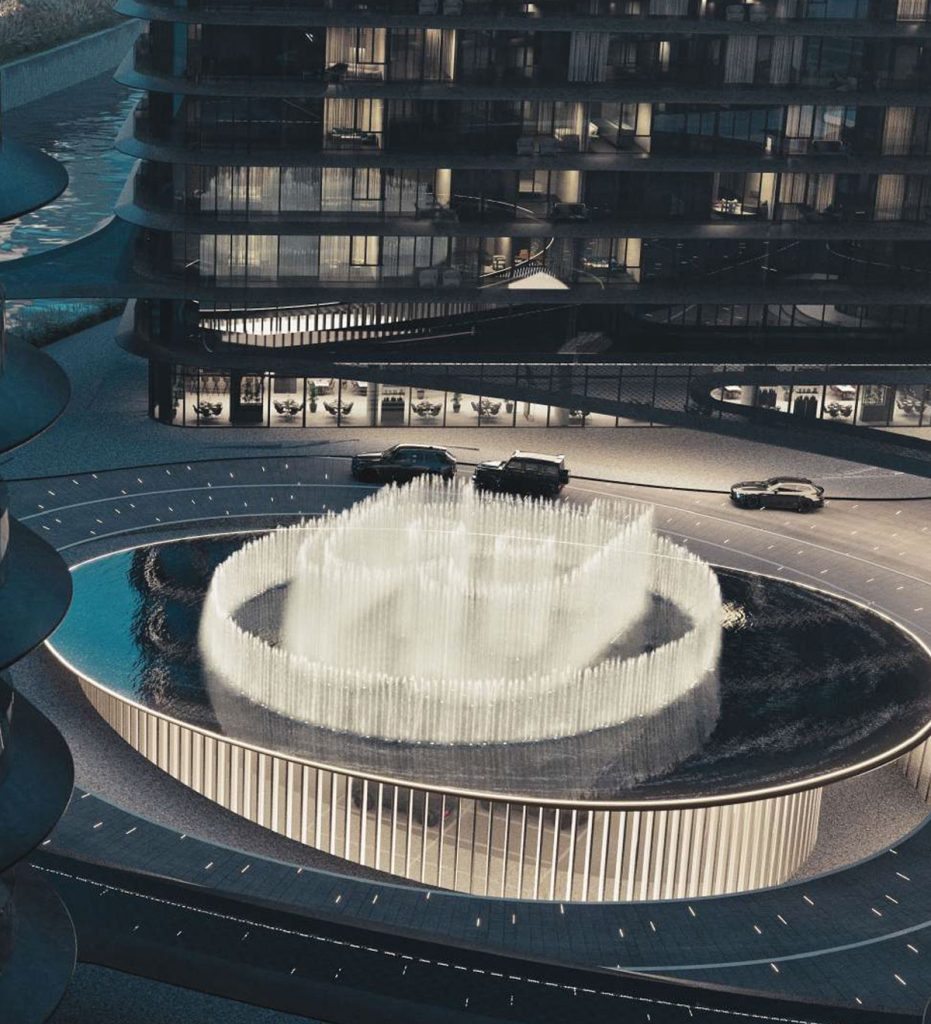
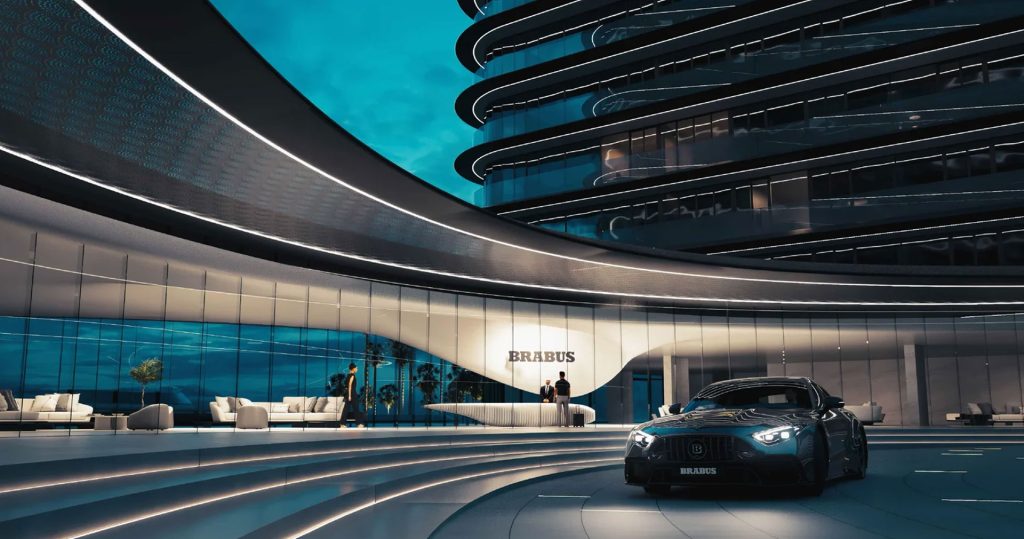
What M3M Brabus Adds to the Conversation
Brabus Residences applies these ideas in a tangible way. M3M Brabus Residences is a branded residential development positioned within Sector 58’s Billionaire’s Circuit, built on a partnership between M3M and BRABUS, the German engineering and performance house. A few characteristics reflect the concepts above:
- Low-density design, featuring only two residences per floor core, as mentioned in our discussion regarding privacy requirements
- Design concept based on performance cues from BRABUS engineering and detailing, rather than regular decorative elements
- High-speed private elevators, reflecting the low-density design concept at its very first entry point
- Italian marble floors and wrap-around balconies, reflecting the design of craftsmanship mentioned above
- Island theme clubhouse, covering more than 2 Lakh sq. ft., as a statement of design, not just an amenity
Together, these choices show how a performance-inspired philosophy can be applied consistently — from planning density to material selection — rather than as a single marketing feature.
What Luxury Homebuyers Should Evaluate Beyond Price
Price and area are easy to compare across projects. These are harder to compare, but often matter more over time:
- Privacy: How many homes share a floor core, lobby or elevator bank?
- Planning efficiency: Does the layout minimise wasted space?
- Material quality: Are finishes chosen for durability, or mainly visual impact?
- Brand credibility: What contribution do the partner brands actually make in a branded home?
- Design philosophy: Are there any design languages or a set of individual elements?
- Location context: Does the existing infrastructure around it exist?
- Community planning: How is density handled throughout the master plan?
- Long-term usability: Will the layout and finishes hold up over a decade of use?
These questions apply to any premium purchase, and are worth working through before price and area become the deciding factors.
Conclusion
Luxury housing in Gurgaon is moving toward a model where design philosophy, craftsmanship and privacy carry as much weight as size. Performance-inspired design—precision, restraint, and material discipline—expresses this shift, while branded residences offer buyers a clear way to experience it.
M3M Brabus Residences illustrates this direction: a low-density, branded development built around a design partnership with BRABUS in one of Gurgaon’s established luxury corridors. It reflects a broader change in what discerning buyers are learning to prioritise, rather than defining that change on its own.
Frequently Asked Questions
What is performance-inspired residential design?
A design approach that applies principles from high-performance engineering — precision, proportion, material discipline — to homes, favouring considered detailing over decorative excess.
What are branded residences?
Homes developed in collaboration with a recognised brand, where the brand shapes the project’s design language and standards, not just its name.
Why is privacy important in luxury housing?
It affects daily experience directly — fewer neighbours per floor, shorter waits, quieter common areas — and has become a defining factor for buyers who could once take space for granted.
What should buyers look for in a branded residence?
What the partner brand actually contributes — design language, material standards or planning philosophy — rather than assuming the association alone adds value.
How can location influence the value of a luxury residential concept?
Established infrastructure, connectivity and a recognised address affect how a design concept received and how it holds value, even when design is the primary draw.